How global teams choose a research partner in Latin America

Ilustración de SLICE en Unsplash
A good study can be designed anywhere. What can't be settled from a distance is the confidence that the design, once it lands in Lima or Buenos Aires or Santiago de Chile, will reach the right people, ask in a way that resonates, and come back with something true — rather than something that only roughly resembles the answer you were expecting. That gap, between a design and a finding, is where the choice of a partner is really made.
With large brands, the starting point is usually a study already shaped at headquarters — often through a network like UXalliance. The framework, the approach, the questions: they exist. What's missing is someone to land it in the region and carry it through.
And landing it is less mechanical than it sounds. Tropicalizing a study isn't translating a questionnaire. It's knowing that a question which works in one market rings hollow in another; that an incentive that makes sense in one country stops making sense across the border; that the same profile is recruited one way in Quito and another in Buenos Aires. Executing well means holding the rigor of the original design intact while everything around it — the language, the context, the fieldwork — changes from country to country.
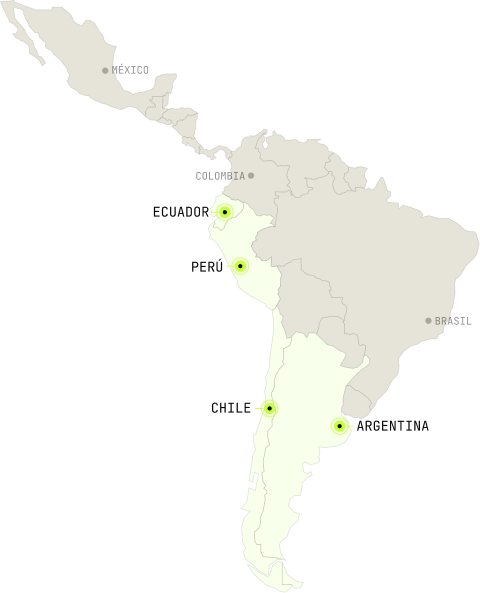
When a global team decides who to trust with that, they look at a few things, and they look closely. They look, first, at whether the partner knows the region from the inside. Argentina, Chile, Peru, and Ecuador are four markets and four consumers, with reach that extends into Mexico, Colombia, and Brazil; covering the region means knowing each country, not treating it as a bloc.
They look, next, at who answers for the work. One point of contact, one name on the result, accountable across the whole region — rather than a patchwork of local fieldwork they'd have to coordinate themselves. And they look at the standard. A demanding design deserves execution to match, and that's shown through real work: research delivered in the region for brands like Meta, Spotify, and Iberia — through UXalliance — says more than any methodology slide.
One thing goes unspoken and always matters: language. The conversation with the global team happens in English; the fieldwork happens in each participant's own language. Whether nuance survives that round trip is often the difference between a data point and an understanding.
In the end, what tips the balance is rarely price. It's the confidence that a study conceived in one place will be carried out in another with the same rigor it was born with — and come back with the region understood.
Las mejores decisiones nacen de la evidencia correcta.
Hablemos